Reconnecting our minds with our bodies so that we can reconnect with nature
Words by Emilija Veselova
As we covered in the previous monthly “Nature and us, we are kin with one another,” humans are part of nature. But our capacity for seeing, feeling and believing in our connection with nature is decreasing due to busy lives, distracted encounters and ever decreasing presence of nature in our cities and dwellings (think: parks replaced by buildings and old-growth trees cut down just to be replaced by pavement or monoculture lawns).
But luckily, there is a part of nature that is always with us. Our bodies.
And we can do many things that can help us reconnect with our bodies and, through them, to nature around us. So that’s what this month’s story is all about.
(You might also notice that the voice of this monthly is different. It’s because it’s written by someone else. Hi! My name is Emīlija, and I run the newsletter and podcast Multispecies Digest with reflections, approaches and questions that help us grow into humans, businesses and societies that value all life. I’m glad to contribute to the Yurt Collective this month.)
The idea that our bodies are the immediate way for us to reconnect with nature can seem odd at first. It’s a human body. What does it have to do with nature?
But if we take a look at our bodies from different angles, leaving the day-to-day pre-conceived notions behind, we can notice that our bodies are not as straightforward as we are used to think.
From one angle, our minds (at least for those of us who are Westerners) are used to separating ourselves from the rest. I am a human. I am a separate being. Separate from these other humans, from that tree over there. I’m an individual, with my individual thoughts, ideas, goals and rights. I know clearly where my body ends and where ‘not me’ begins. I think. I have rational thoughts, which also makes me separate, different from others, from their thoughts, from their ideas. From the mind’s perspectives, we are separate rational beings, in control of ourselves, and separate, different from nature, and better than it, because we have such developed rational minds. In our minds, we typically see human bodies as separate and superior nature.
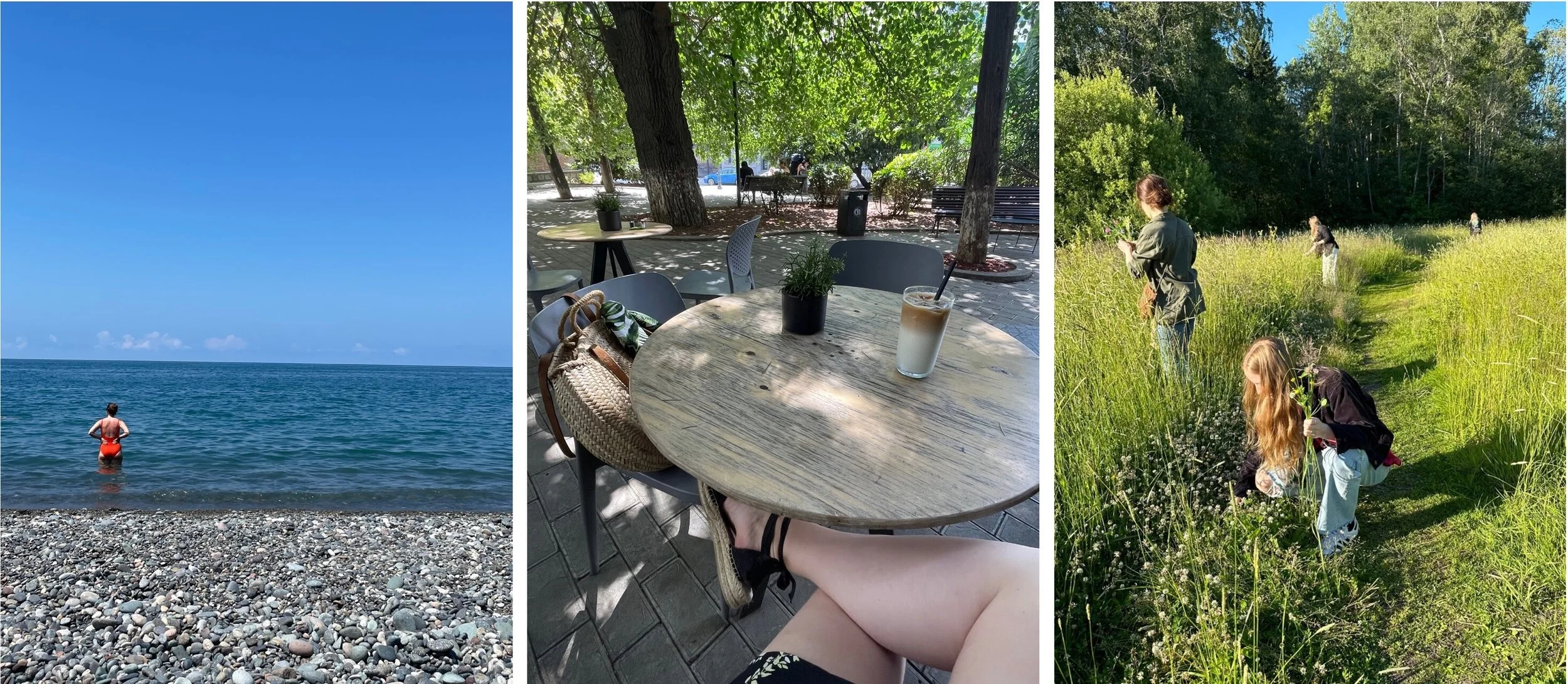
Photos by Emilija Veselova
From other angles, though, through our bodies we are direct and inseparable participants in the web of life. We are organisms. Built from the same atoms and quantum particles that the trees, rocks and soil. Breathing the same air. Drinking the same water. Eating fruits, vegetables and flesh grown by others in nature. Releasing digested matter back into nature, where organisms of various kinds will feast on our waste to continue their lives. We’re exchanging daily with plants, animals, waters, soils, and airs. There are also millions of bacteria in our guts and on our skin (so we are actually a collective of many beings living together?). Every second we exchange with other parts of nature, and it’s hard to tell where our bodies end and other parts of nature begin. From the body’s perspective, we are a part of nature, we are nature, unique in our shape but endlessly similar to everything else.
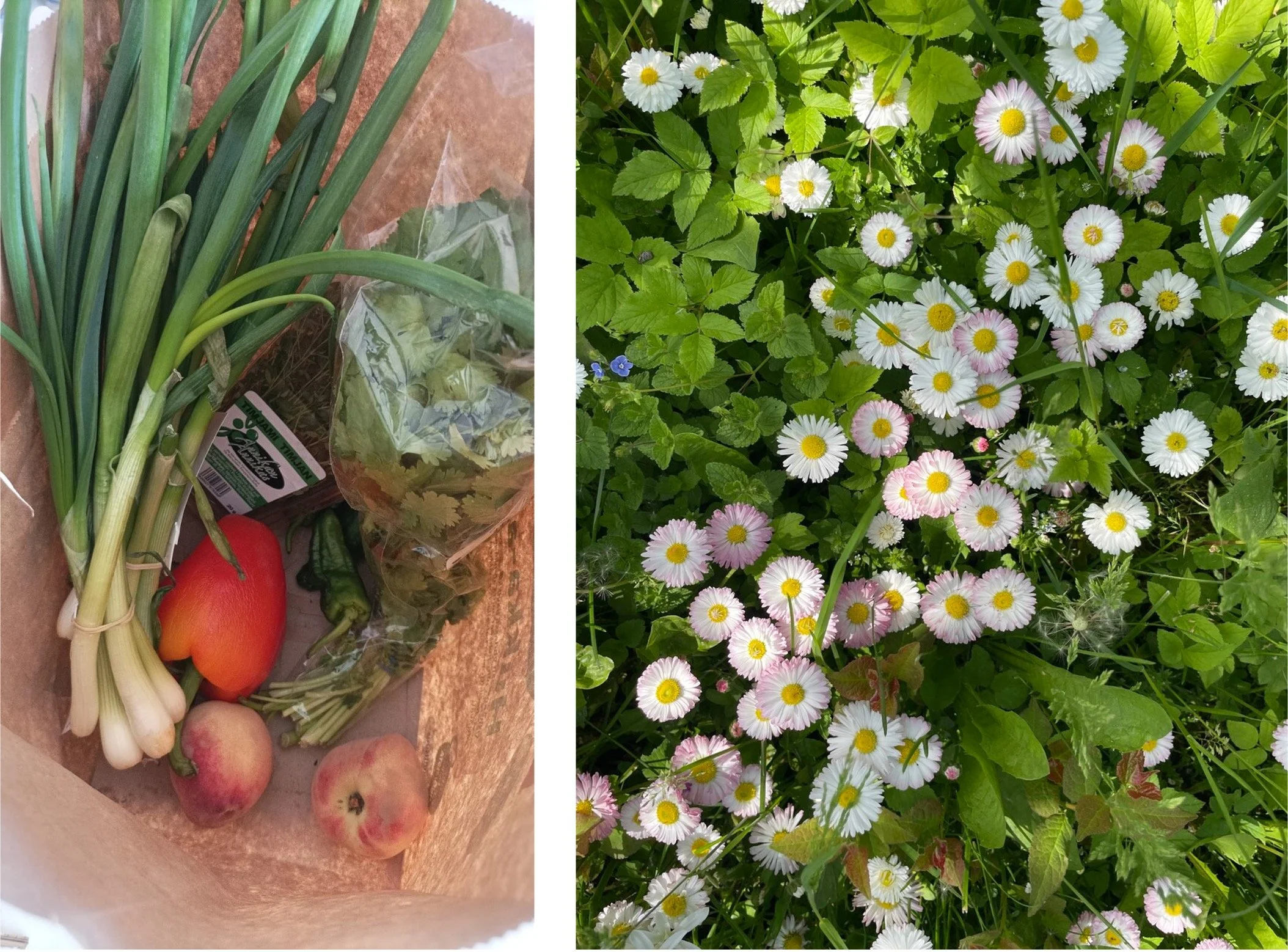
Photos by Emilija Veselova
Sadly, many of us (if not all) have been trained throughout our lives to disengage and disassociate from our bodies. To use our minds to control our bodies, to master them, to apply rational principles and force rational, cultured behaviours. Your body does want to wake up in the middle of the dark Finnish winter? Disregard that, use your discipline (your mind!), drag yourself out of bed and get going! Your body’s thirsty, but the class or work meeting just started? Persevere, wait, control your urges! You’re body is stiff from all the desk work? Ignore that, the job and what your mind needs to get done is more important!
But maybe, just maybe, this approach of neglecting our bodies, controlling our bodies to fit what our minds need, what our social and economic systems need is also the gateway for neglecting nature. (Or maybe vice versa, who knows what came first, the chicken or the egg.)
If we constantly ignore our bodies’ needs, it’s much easier to tell the trees and animals to wait, to adjust to discomfort, to accept their needs not being met. If I’m controlling myself, through discomfort, pain, suffering, working hard to be the perfect part of human-made systems, then others in nature should too.
But there are things we can do to help out minds reconnect with out bodies. To listen to the bodies’ needs. And it can serve as a gateway to stop our minds from trying to distance ourselves from nature and to control it all.
Here are five daily habits we all can do, to make our minds pay more attention to our natural bodies:
1. Responding timely to our bodily cues. What if we responded to our hunger, thirst, urges to use the bathroom when we received them, not 10, 20 or 60 minutes later? Learning to recognise our bodies’ needs and satisfying them as they arise is one of the ways to signal to the mind that body, our natural physicality is important, not just a burden. And it’s a great way to signal to the body that it is safe, heard, cared for, an important part of our presence in this life.
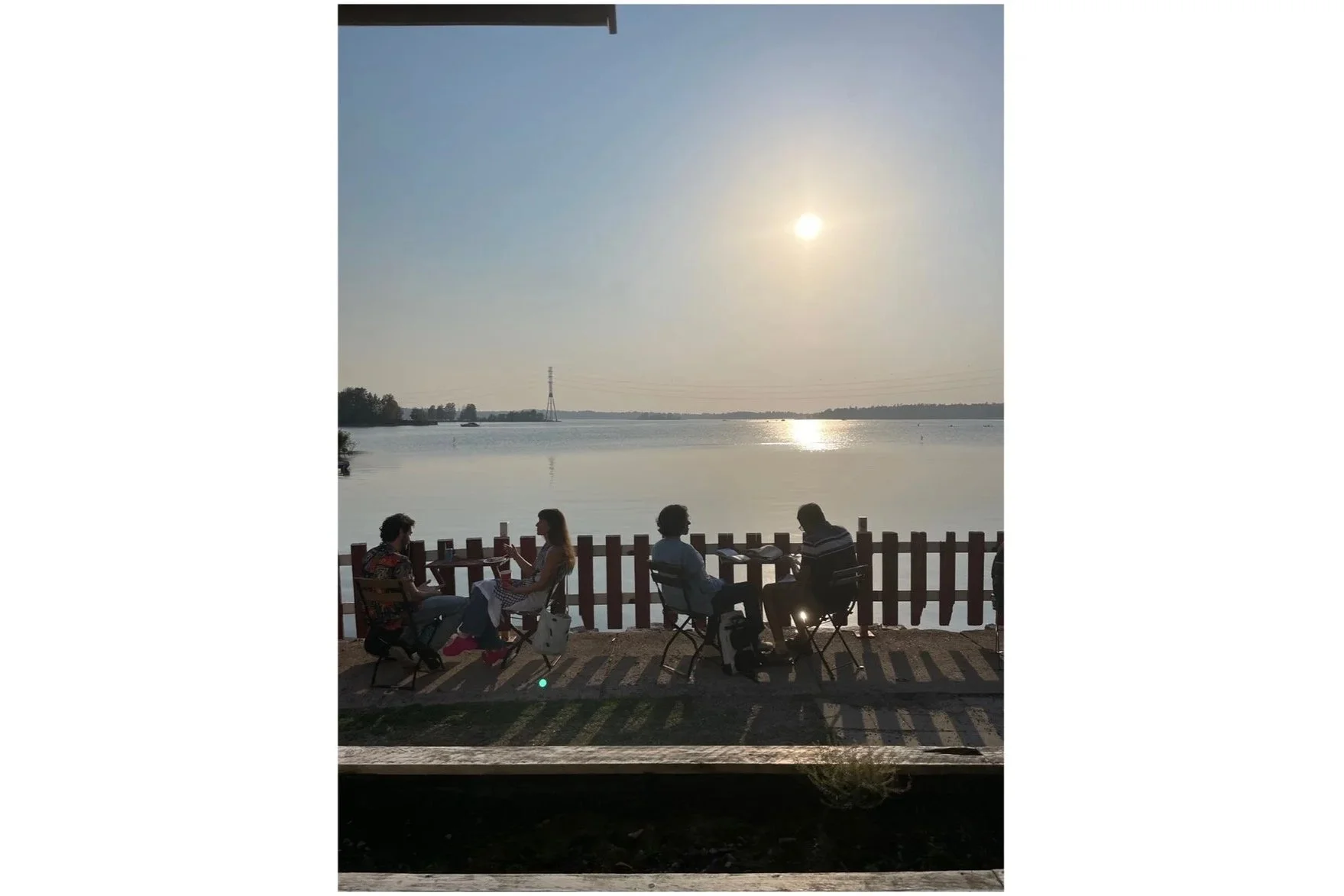
Photo by Emilija Veselova
2. Checking in to see if our shoulders are relaxed. Though our conscious mind might believe that it controls all of the body, all of the time. It is not so. As we navigate daily stressors our shoulder get tense. One of the ways to care for the body is to notice its discomfort and make conscious effort to mitigate it. So, every time you remember, check in with your shoulders. Are they tense? Can you relax them?

Photo by Emilija Veselova
3. Doing yoga (almost) daily. Not for a long time, just some 10-15 minutes, even 5. In my humble experience, doing yoga regularly allows the mind and body to become better friends (or lesser enemies). Why? Because you need to connect your mind’s desires–or the instructions your mind might be hearing from a yoga teacher–with an actual muscle movement. Yoga helps to develop a clear body-mind connection allowing them to work in tandem, as one, not as two separate beings. If you have never done yoga, I can highly recommend Yoga with Adrienne on YouTube. And for a bonus body-mind-nature reconnection, you can imagine yourself embodying the animal or natural subject the pose asks you to be, like the lizard, or a dog, or a mountain, or pigeon.
4. Reading out loud. In our current world, so many things are done by mind alone. Like watching Instagram reels and TV shows, and reading, be that content online or a book. Reading out loud, though strange at first, makes your mind and body synchronise. Every word needs to happen both in your mind and on your lips. It slows you down. It makes you hear your own voice, your body’s voice. With time, it helps your mind to see that cognitive activity also requires your muscles, you brain structure, your body. Then, as you read out loud, suddenly you’re not just your mind, you’re a mind-body tandem.
5. Journaling for 3 minutes from body’s perspective. Your body also has a voice, but your mind likely tunes it out. (As weird as it sounds, I can hear my body talking if I let it, if I invite it, if I listen carefully enough and practice the skill of quieting my mind.) To help with that or start practicing it, you can set a 3 minute timer and journal your stream of consciousness. The trick: set an intention and ask your body to come forward and write for you. Whatever it feels, whatever it wants to tell you. For just 3 minutes. (You can do the same thing with you mind and your soul as well, if you believe in souls, that is.).
