Nature and us, we are kin with one another
Can love guide one to renew their kinship with the natural world? Love for the self and for the world.
In recent decades many researchers have examined the concept of kinship between humans and nonhumans, and more specifically kinship between humans and nature. The idea usually stems from the argument that most people have lost their contact with nature and as a result of it cannot fully grasp the environmental impact that current lifestyles and large systems are creating.
These ponderings usually reach the conclusion that this disconnection creates negative impacts on global peace, environmental sustainability, and mental health and wellbeing. In a way, finding or building kinship with nature is seen as a form of medicine to reverse the damage that has been done. Although kinship has a romantic connotation, this mindset shift is proposed not only for individuals but also for businesses and large-scale manufacturing systems.
This thinking is an extension of the ongoing debate about humans and their ways of relating to nature: is it possible that humans transcend the natural world and develop their minds and cognition which then allows them to create culture and control nature, as has been happening in heavily industrialized countries? An opposing view to this, which has been gaining significant traction since the last century, and perhaps was never disrupted in Indigenous communities and in the Global South is that humans are already part of nature. For example in their research from 2025, Pilar Gauthier and colleagues argued for Mother Earth kinship and proposed that “nature connectedness is central to Indigenous embodied understanding and practice”.
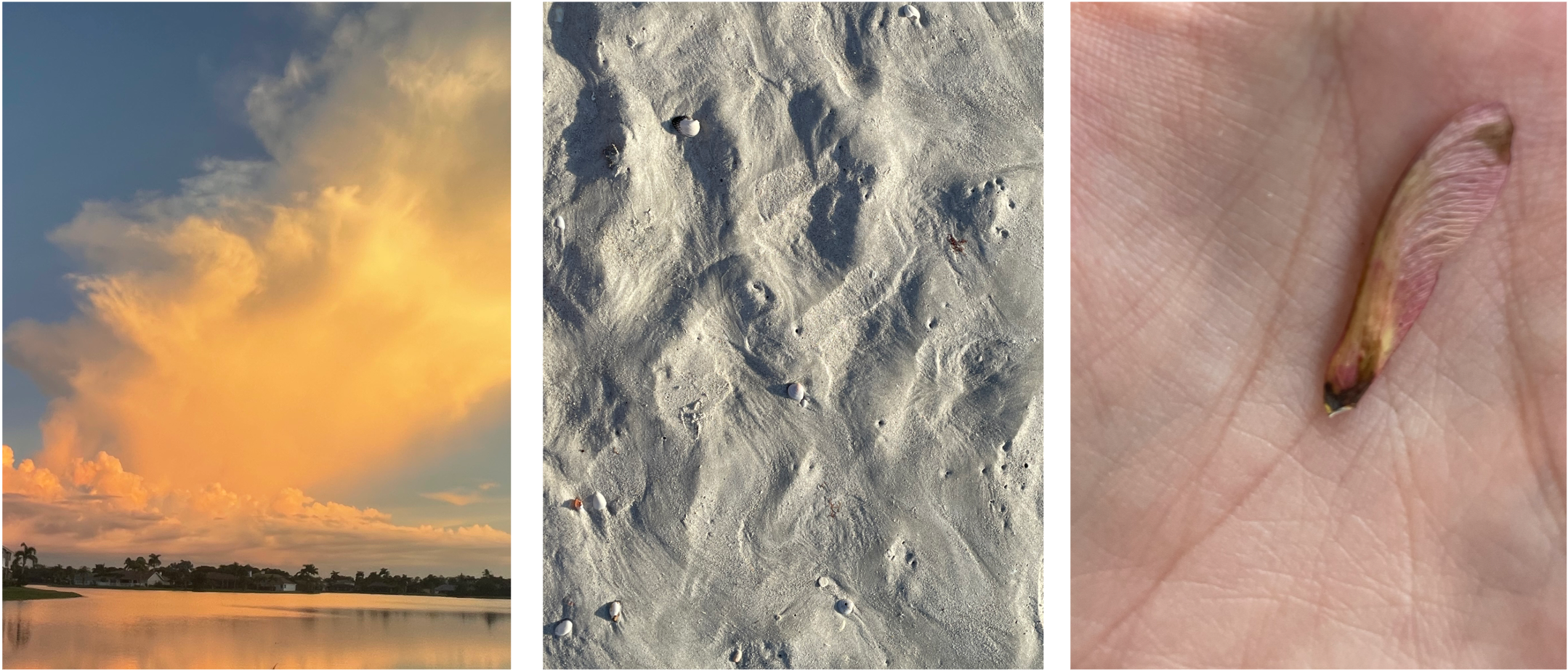
Photo: Bilge Merve Aktaş, various years.
It is indeed true, objectively. Humans are nature. Yet, with the things we build and construct, it is also true that we have lost contact with it and, to an extent, assigned ourselves the role of controllers causing mass destruction, overhunting, domestication, and so on. However, it also clear that it is not possible to fully fulfil the role of a controller as even a virus that is invisible to the naked eye can easily destroy everything human. Yet, the illusion of human dominance still prevails.
Losing the sight of where humans are in this world is potentially one of the many reasons why modern humans are struggling mentally, materially, and emotionally. If humans are nature and if we have become so far away from it, then we are also very far away from ourselves.
Considering everything going on in almost every part of the world, paying attention to kinship may not seem significant enough in comparison to the millions of people who are trying to survive every day. But could one reason why so many problems exist in the first place be related to losing the core understanding of what it means to be human? At the end of the day, egotistical ambitions have been leading most global problems and conflicts, if not all. To win wars, to accumulate wealth, and to gain more power.
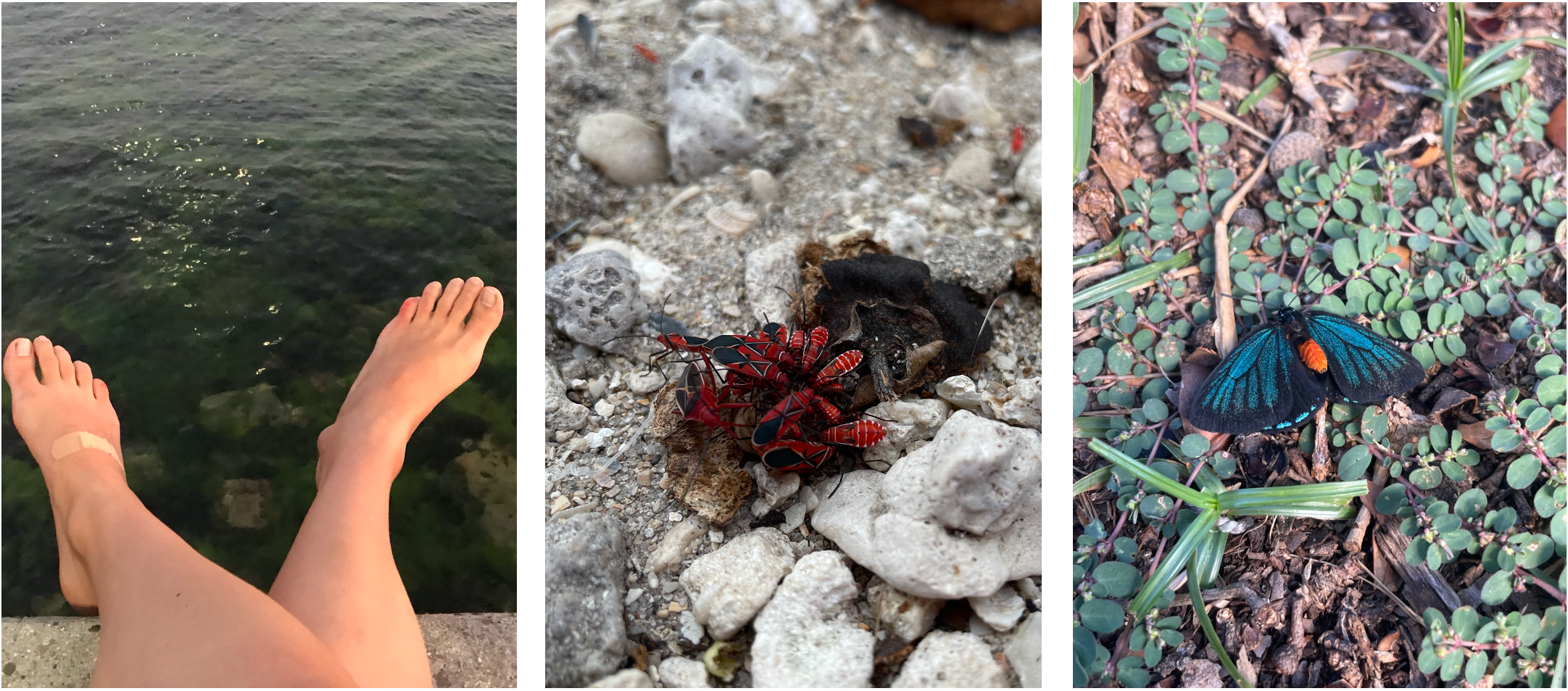
Photo: Bilge Merve Aktaş, various years.
This text is a starting point not only to rediscover the nature-ness of yourself but also to demand the same from those in power. Bringing the focus back to our kinship with all things that are not human or human-made has the power to facilitate a change in personal mindsets which then can extend to our communities. This rewiring requires ongoing reflection, slowing down, and being in the world that is not entirely human-made.
At the core of this is loving the self and the universe.
As biologist Micheal Cohen eloquently put it in 1987 (pages 212, 212, 214),
“We learn peaceful co-existence by building it” and
“Unlike … traditional education, the natural world further encourages … (one) to respect … sensations, thoughts, feelings, and actions”.
“Without words or numbers, the earth conveys information. It tells (me) to breathe and share my life for our mutual existence”.
What are some other steps to repair our kinship and rewire ourselves as nature?
Be with nature and yourself. Spend quality time.
With yourself, write a few sentences.
With nature, observe the textures, creatures, colors, and everything else around you.
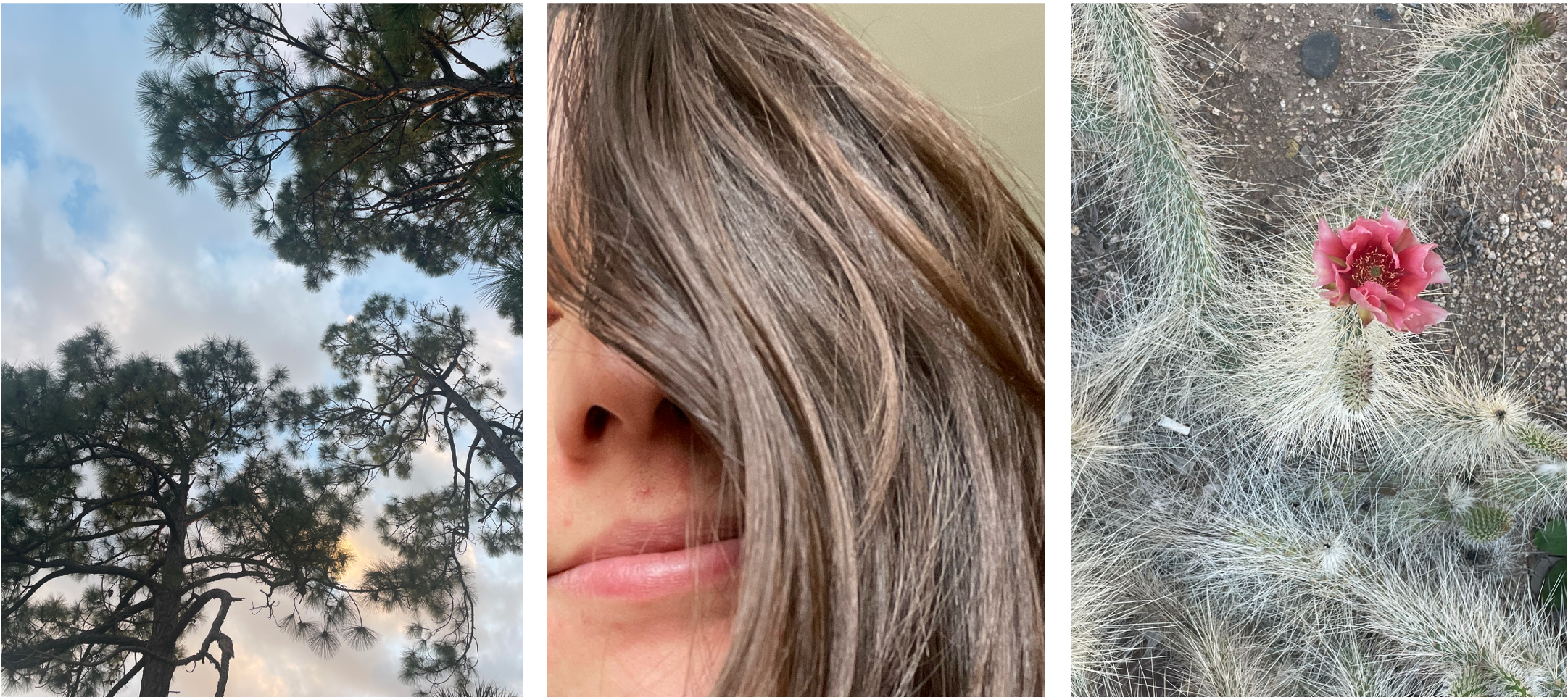
Photo: Bilge Merve Aktaş, various years.
A little task to start this out.
Go out, take a walk, perhaps several walks. Look around and observe a small plant, a tree, and then the sky. Look down at the soil and spot some animals, maybe a bird or an insect. Then look at your own body, the curves, the wrinkles, and the hair.
Use these moments as a reminder to a guiding principle of a mindset shift: Nature and us, we are kin with one another.
Cohen, M. J. (1987). Regenerating Kinship With Planet Earth. Between the Species, 3(4), 12.
Gauthier, P. E., Chungyalpa, D., Goldman, R. I., Davidson, R. J., & Wilson-Mendenhall, C. D. (2025). Mother Earth kinship: Centering Indigenous worldviews to address the Anthropocene and rethink the ethics of human-to-nature connectedness. Current Opinion in Psychology, 64, 102042.
