The Minimalist Toolkit: 7 Essentials for Assembling Your First Repair Toolkit
Words by Hazal Gümüş Çiftçi
Did you ever find yourself wanting to do home repairs or maintenance but not knowing how to start because you do not know what you need and don't even own any tools?
Then, this essay is for you!
All living areas require maintenance, one way or another. Sometimes it's simply keeping things tidy, sometimes it's DIY'ing a shelf unit. More often than that, it means showing a bit of care to the worn-out parts of the home, like loose screws, broken bits, or ripped off fabrics. To keep a well-maintained living area, you need to dedicate some time and patience. But you do not need a bulky, expensive toolbox to handle everyday repairs.
Essential tools will go a long way. A minimalist approach means owning fewer, high-quality items that serve multiple purposes.
In fact, you don't even need to start with owning things. Before buying anything, check if your neighborhood has a lending library to borrow specialty gear. Or ask your community, friends, neighbors if they own one. After researching how and why people repair and facilitating a number of workshops, here is my list of tools for you to put together for daily use:
1. Multi-Bit Screwdriver & Claw Hammer
A multi-bit screwdriver replaces an entire set by storing interchangeable heads in the handle. Use it to tighten loose hinges and assemble furniture. Pair it with a classic claw hammer to drive nails and pull them out easily.
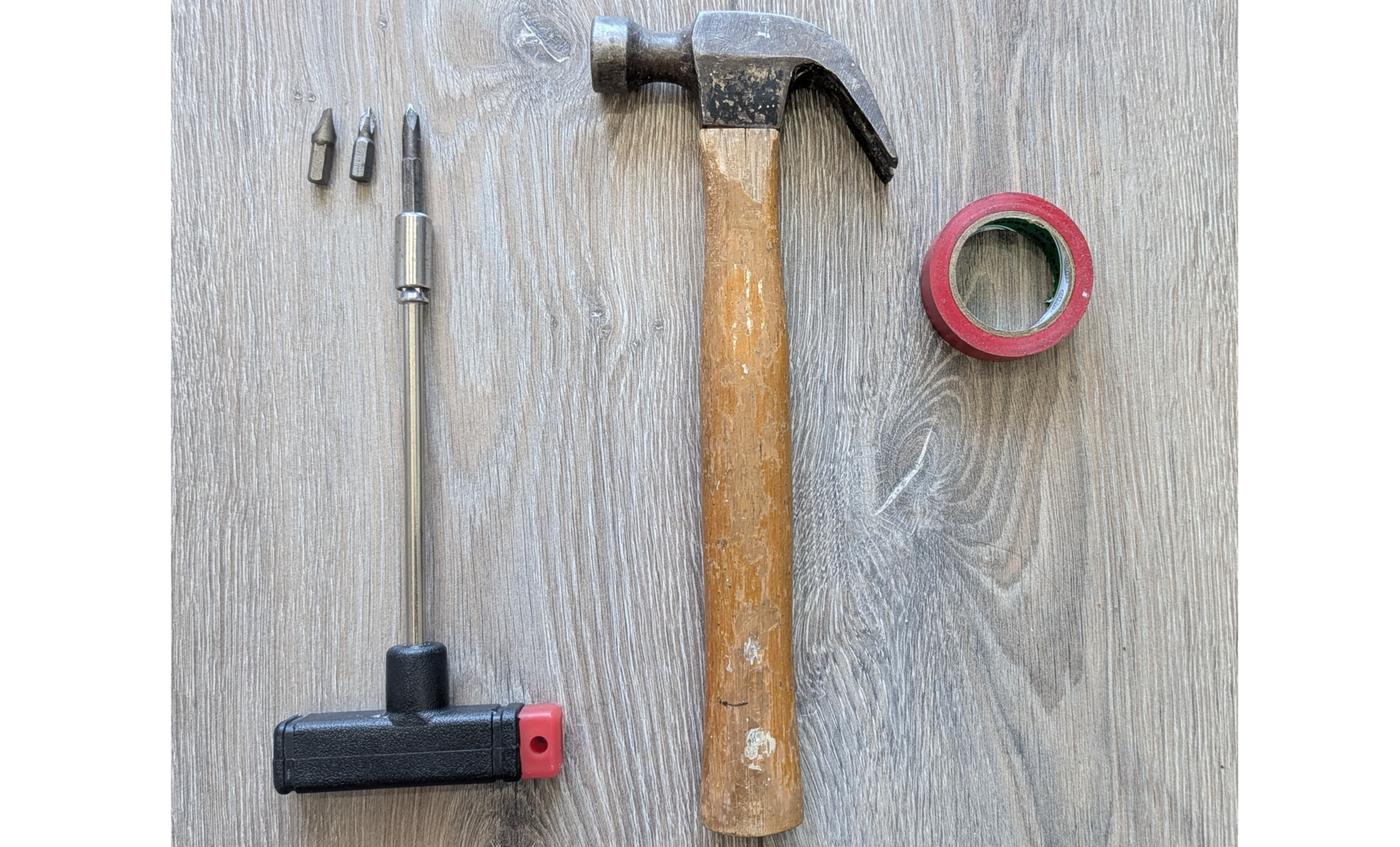
Photo by Hazal Gümüş Çiftçi
2. Assorted Hardware Set
Keep a small, organized case of varied nails, screws, and wall anchors. This eliminates random trips to the store when you need to secure a shelf or hang a frame. (Tip: when you buy assemble-yourself-furniture, remember, sometimes they have extras. Keep them for future use, just in case).
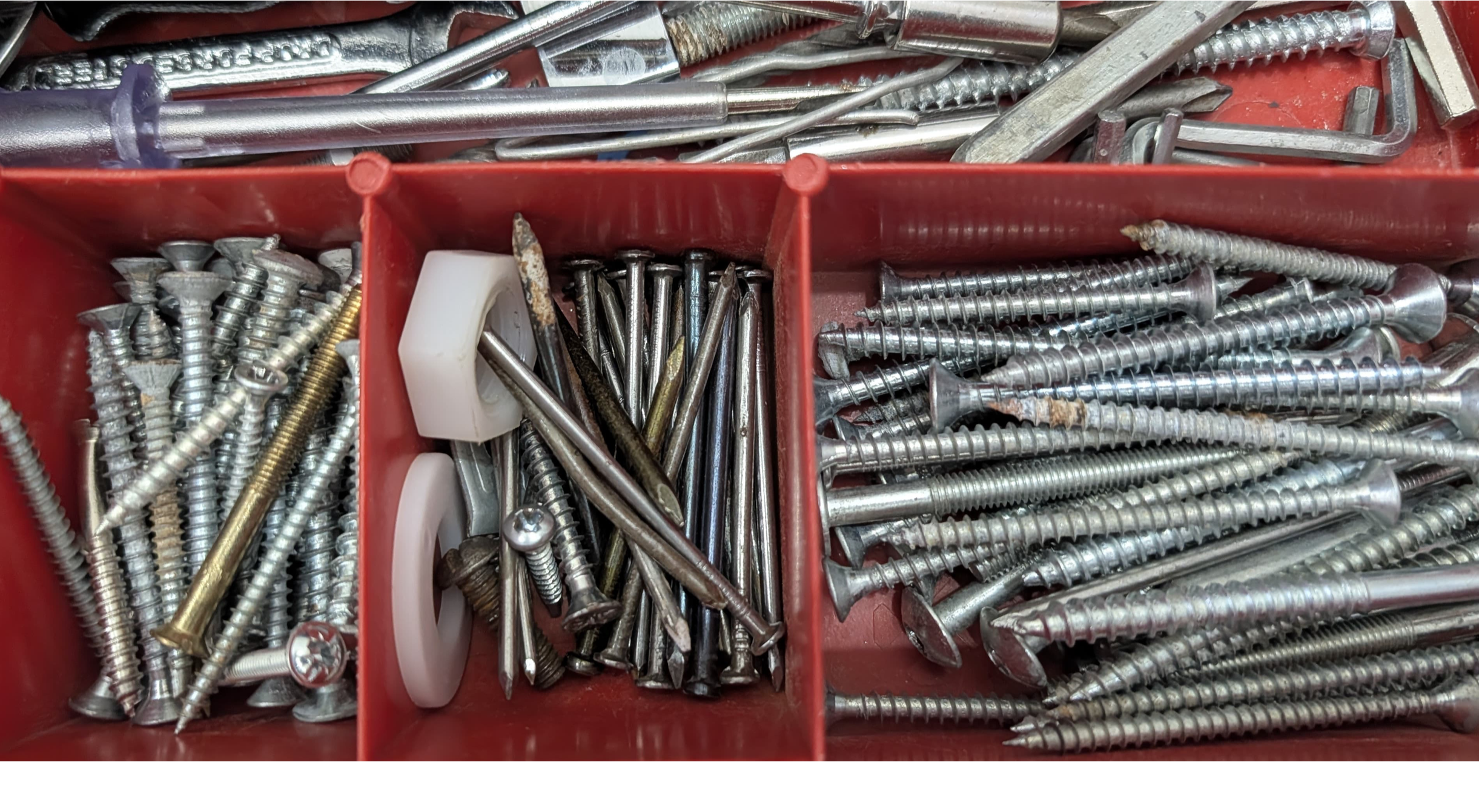
Photo by Hazal Gümüş Çiftçi
3. High-Strength Adhesive
Super glue handles fixes where hardware fails. Use it to repair broken ceramics, secure loose shoe soles, or mend fractured plastic items instantly.
4. Electrical Tape
This tape is flexible, insulated, and leaves minimal residue. Use it to safely wrap frayed charging cords, bundle loose wires, or make quick, temporary hold-fixes.
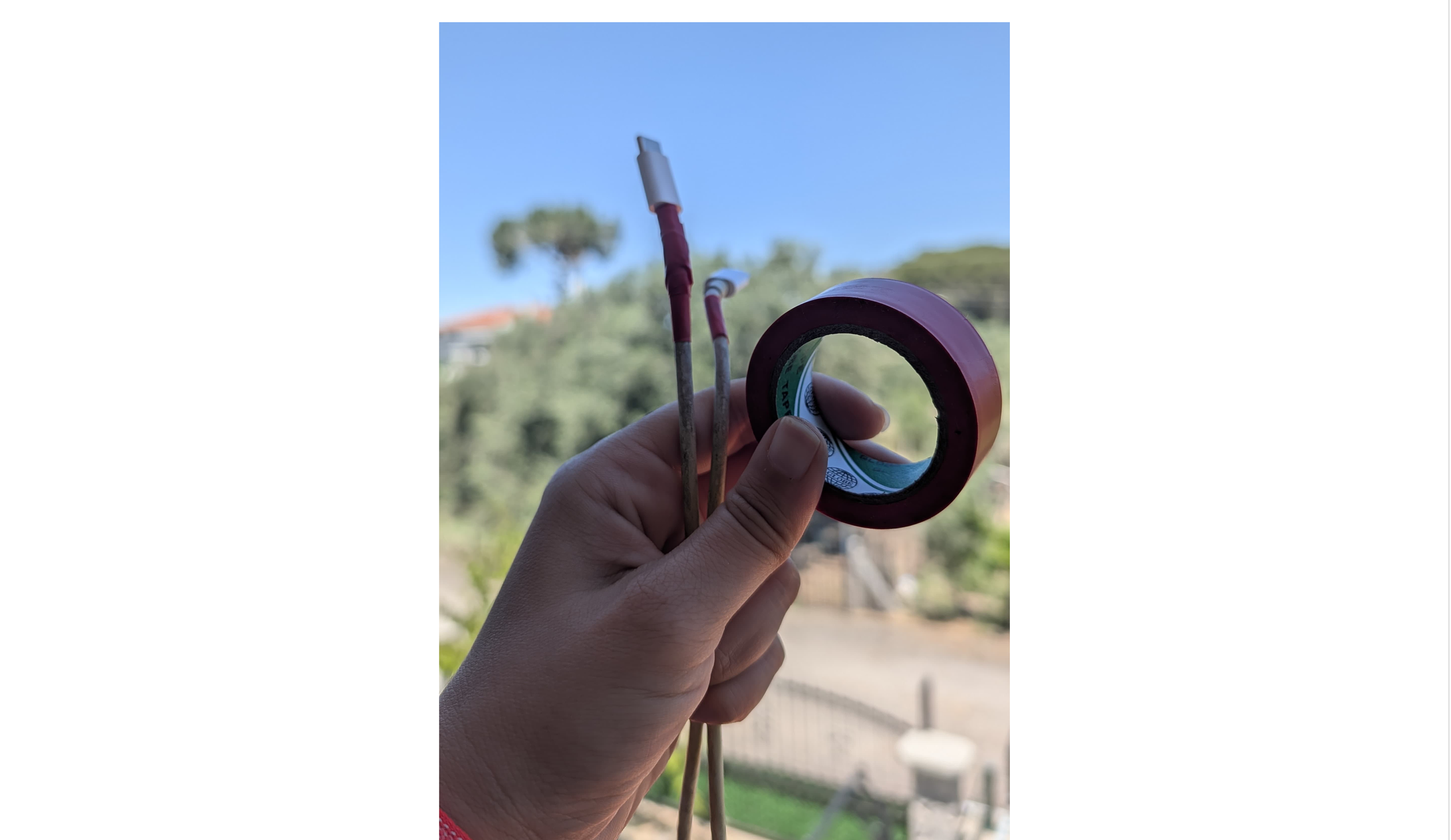
Photo by Hazal Gümüş Çiftçi
5. Heavy-Duty Scissors
Dedicate one strong pair of utility scissors strictly for tasks like cutting thick cardboard, tape, or plastic packaging.
6. Compact Sewing Kit
Wardrobe maintenance is part of home care. Keep a few needles and neutral threads (black, white, and gray) to replace missing buttons and mend sudden seam rips.
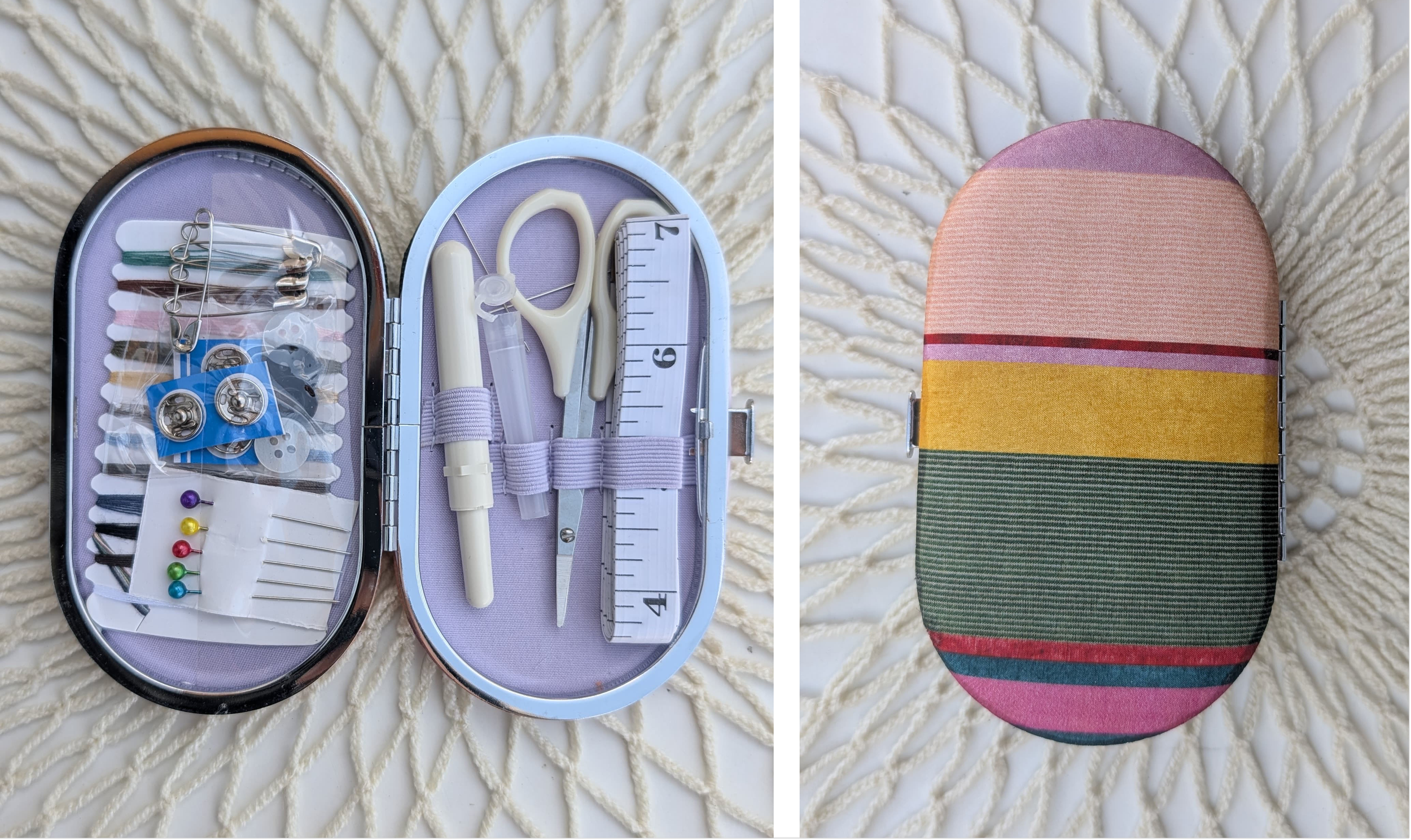
Photo by Hazal Gümüş Çiftçi
7. Own Less, Share More
Coordinate with your community and friends to share these basics so you do not duplicate items. For everything else, rely on your local resources, make sure you check if there are any stores or libraries that lend tools. With simple steps and some time, you'll be able to keep your living space uncluttered and functional.
