Project Pantry: reducing waste, saving money, practicing creativity
Words by Emilija Veselova
Last winter, I ate the same meal for almost three months. Boiled potatoes. Oven roasted chicken. Broccoli or green beans on the side. (Sometimes, I would switch potatoes with rice.)
It was all I wanted. And it was not a surprise, as I do get these kinds of hyper-fixations from time to time. And yes, I also ate other things for breakfasts and at the work canteen. But for all lunches and dinners I ate at home it was the same thing.
Meanwhile, my cupboards and drawers had bags, jars and cans of non-perishable foods. I even had a box under my bed with goodies my mom had sent me from Latvia. I had rice noodles, wild amount of pistachios (thanks, mom!), dried mushrooms, canned fish, spices I had brought from Georgia and bags and bags of tea… Untouched. Just sitting there. Waiting for their time.
This February, I was thinking of moving, and I was repulsed by the thought of potentially having to move these foodstuffs with me (funnily, I’m still living in the same apartment, just without all the food). It was equally repulsive to think that I need to throw this all out. The environmental impact… The sacredness of food I had learned growing up in the post-soviet 90s… The money I would just be throwing out…
So, an idea was born: I must do a Project Pantry.
What is a Project Pantry?
Project Pantry is a challenge people do to use up the foods, spices and other consumables in the kitchen. You can find videos and post across various social media platforms of people documenting their journey and tips (like Immy Lucas or Maria Watkins on YouTube). A project can last one week or a whole year. It really depends. The goal is to cook primarily from the food you already have to avoid waste, save money and work on overcoming food-based overconsumption. Some people take it even further and avoid buying any additional groceries (but that’s a bit much for my taste).
Project Pantry is a sister-challenge to much more popular Project Pan, where people focus on using up their skin care and cosmetics. Using up shampoos before opening new ones. Fully using up a blush (btw, apparently it takes years to fully pan a blush). Not buying products just ‘cuz they’re popular. Watching people do Project Pan is actually what inspired my approach to Project Pantry. In particular, Aimee Rebecca and the way she weighs her products to see progress. And Rebecca (ha, I’m just realizing now they are both Rebeccas) from the After Work Channel and her dedication to reduce her make-up stash.
How did I do my Project Pantry?
I did my Project Pantry from February 24th to September 1st this year (technically, I am still working on some of the most stubborn products, like the never-ending jar of sesame seeds).
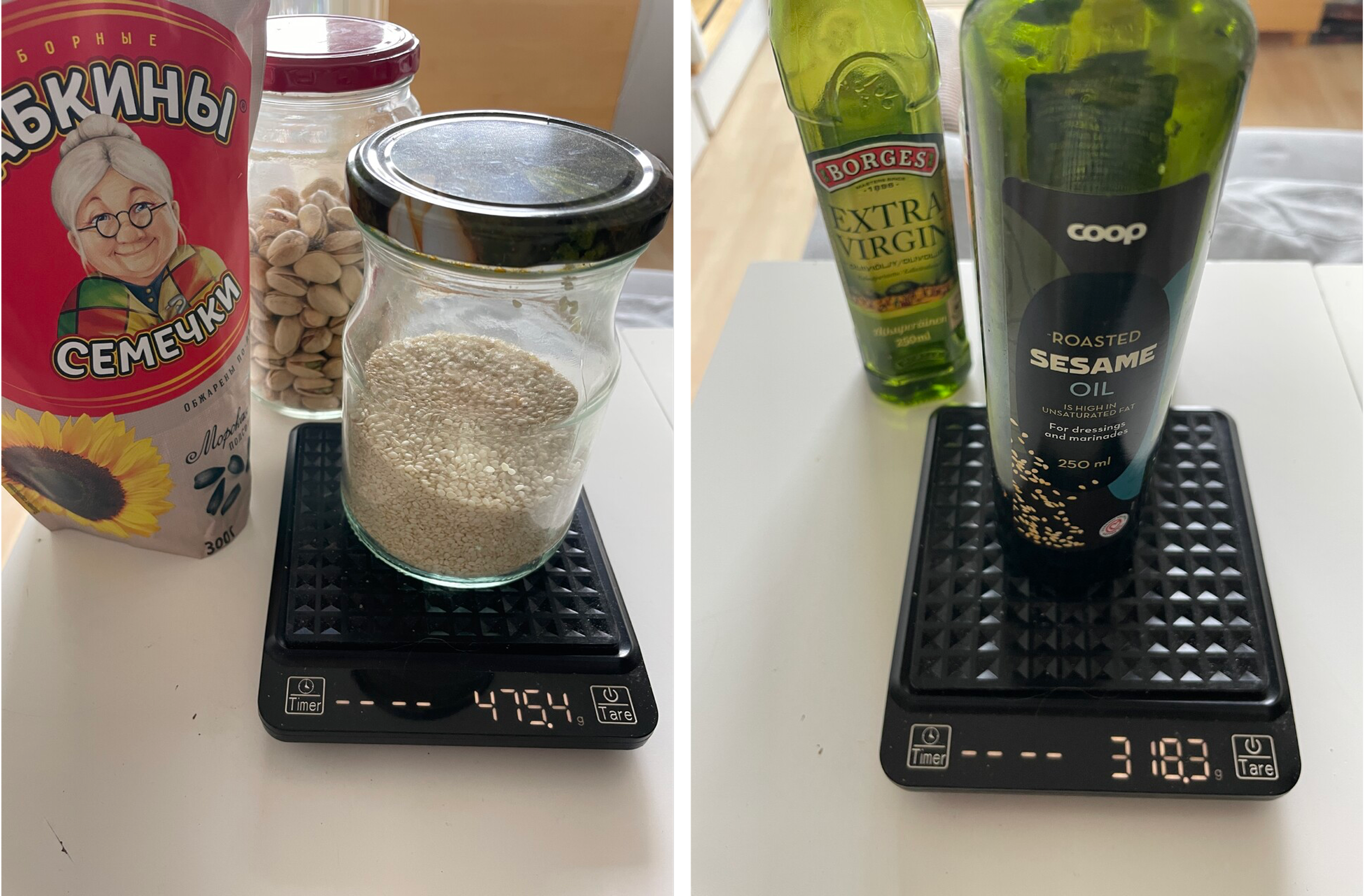
Photos by Emilija Veselova
I did not set a timeframe (like I am doing this for 1 month). Instead, my goal was to use up what I called ‘non-moving foods,’ which included food, tea, spices, condiments, napkins and supplements that I had not touched in weeks or months. I did not include items like coffee, milk or rice which I knew I would use up anyways.
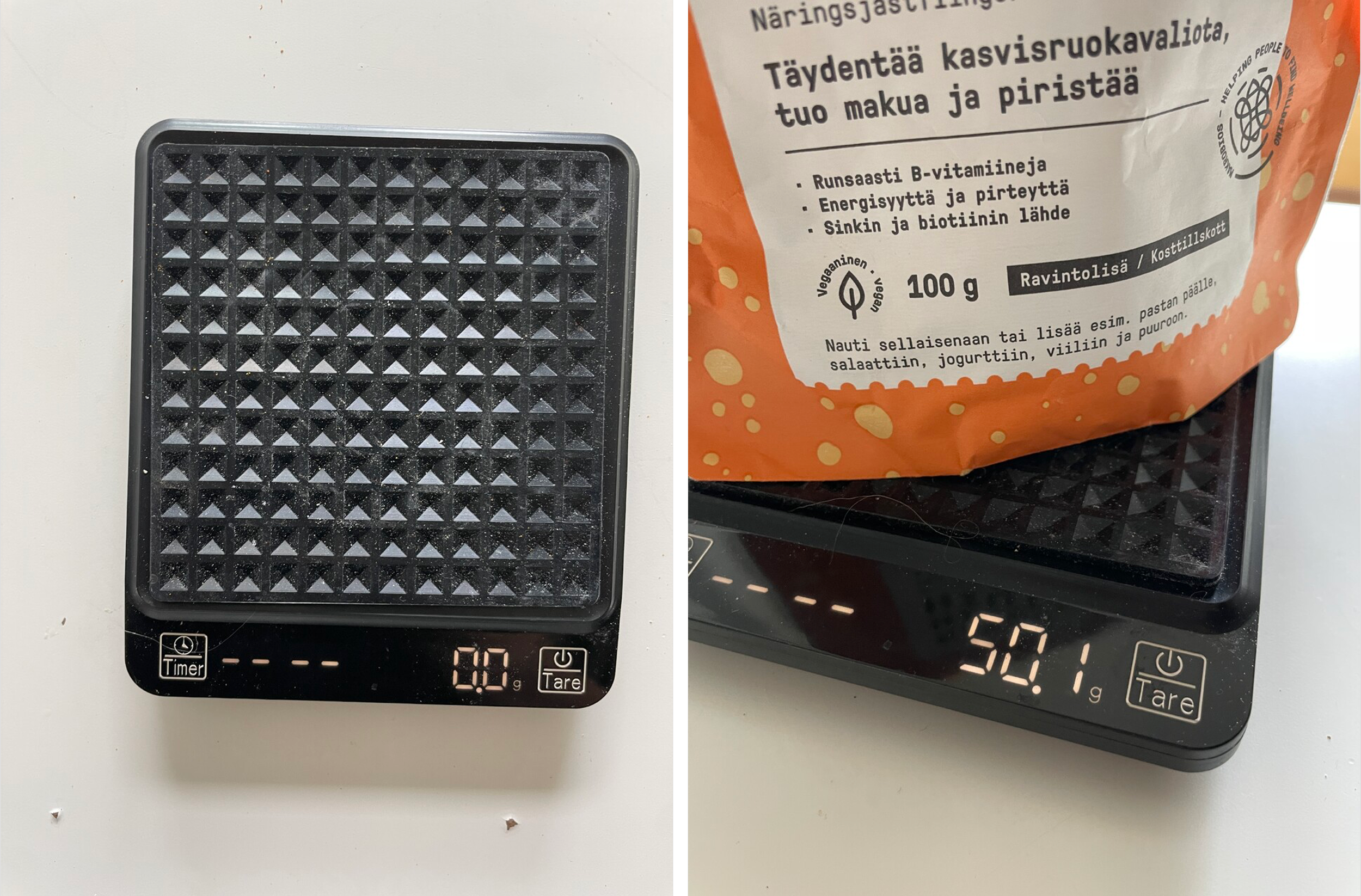
Before starting, I bought a cheap kitchen scale with precision up to 0.1 of a gram. If I had learned anything from Aimee Rebecca is that sometimes it can take ages to use up even a gram of dried goods. (I also had never owned a kitchen scale before, and it has proven to be useful beyond this project, so I’m glad I got it.)
Photos by Emilija Veselova
I weight products with the package they were in. And because of that I talk about ‘items’ used up and not about weight of things.
I tracked my progress in a Google drive sheet, which you can see in some of the photos. I weight the items at the start of the project and then on every 1st of the month. I used up most of my items, but some I ended up throwing out. For example, my 8-years-old honey and long-expired sriracha mayo were rancid when I opened them up.
I strove to use up foods I had, but I still bought produce and some other ingredients to make the recipes happen. Some items were easy and fast to use up (like rice noodles), while others were (and still are) a pain. For example, as someone who does not bake and dislikes hot chocolate, using up 200 grams of raw cacao has been really hard. I have made chocolate oatmeal, semolina and crepes. I even added it to my coffee.
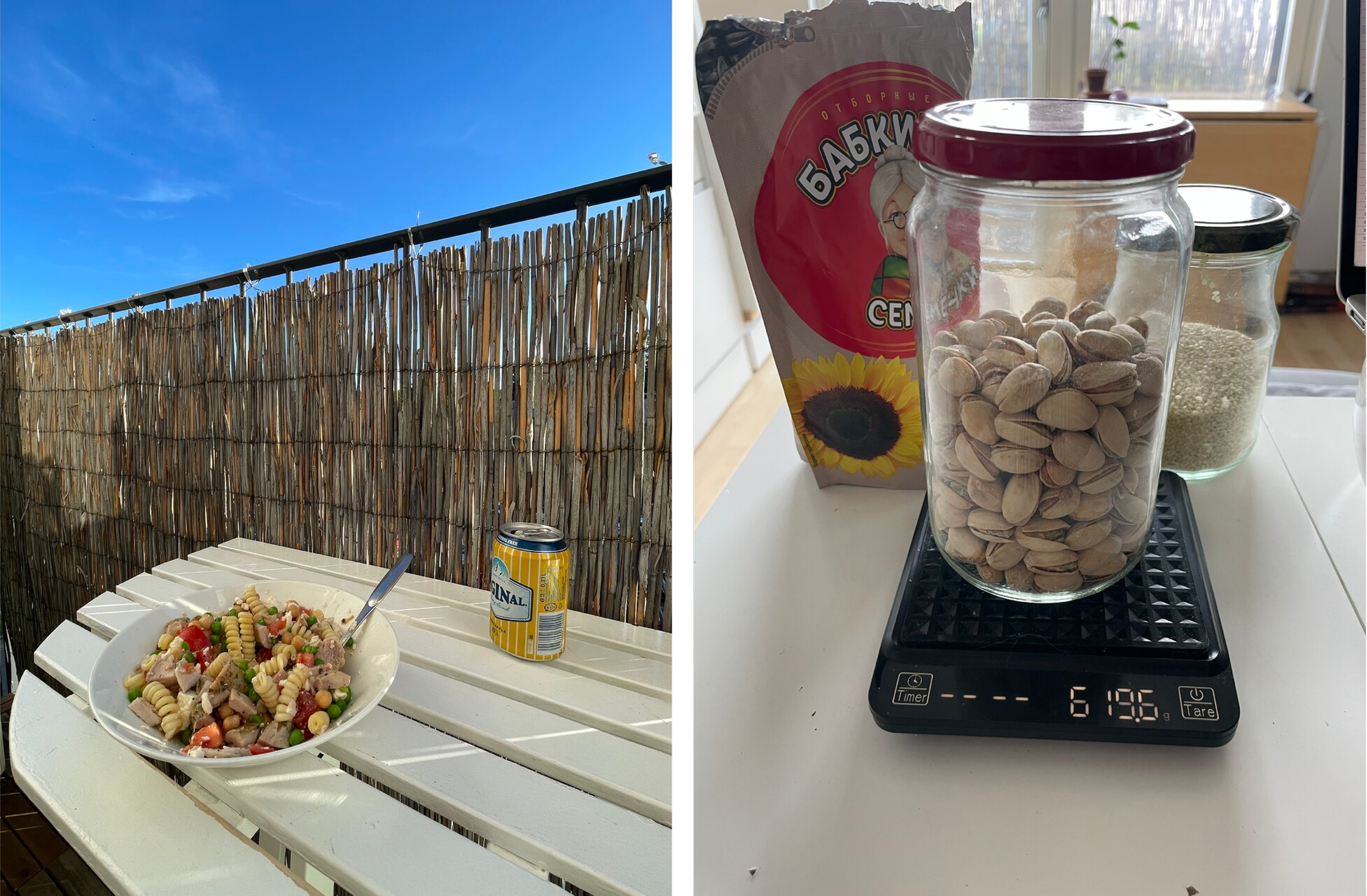
I googled and browsed recipes on Pinterest, trying to find new ways to use the things I had. Many times, I would just sit on my sofa, scrolling through my project excel trying to figure out how to use up the foods in new ways that I would actually find tasty. I focused on making recipes that were satisfying and I was happy to eat. I would not have lasted through the project if I was forcing myself to suffer.
Photos by Emilija Veselova
In 3 months, I used up 70% of all the listed items. I had finished 78% of the foods, all of the tea and napkins, 60% of spices and condiments, and 50% of my supplements.
By the end of the 6 months, it went up to 83% of all items, incl. 86% of the food, 81% of all the spices and 71% of supplements.
I’m not sure how much money I saved, but I was definitely going to the store less. And I was happy to not throw away food worth several 100s of euros. Instead, I used it up.
I would say that my project is over. Because there is not much left. But also, because I ran out of fumes to make it happen. First 4 months were real easy. The last two, I became a bit bored.
What did I learn?
There are a few of the things I learned:
Photos by Emilija Veselova
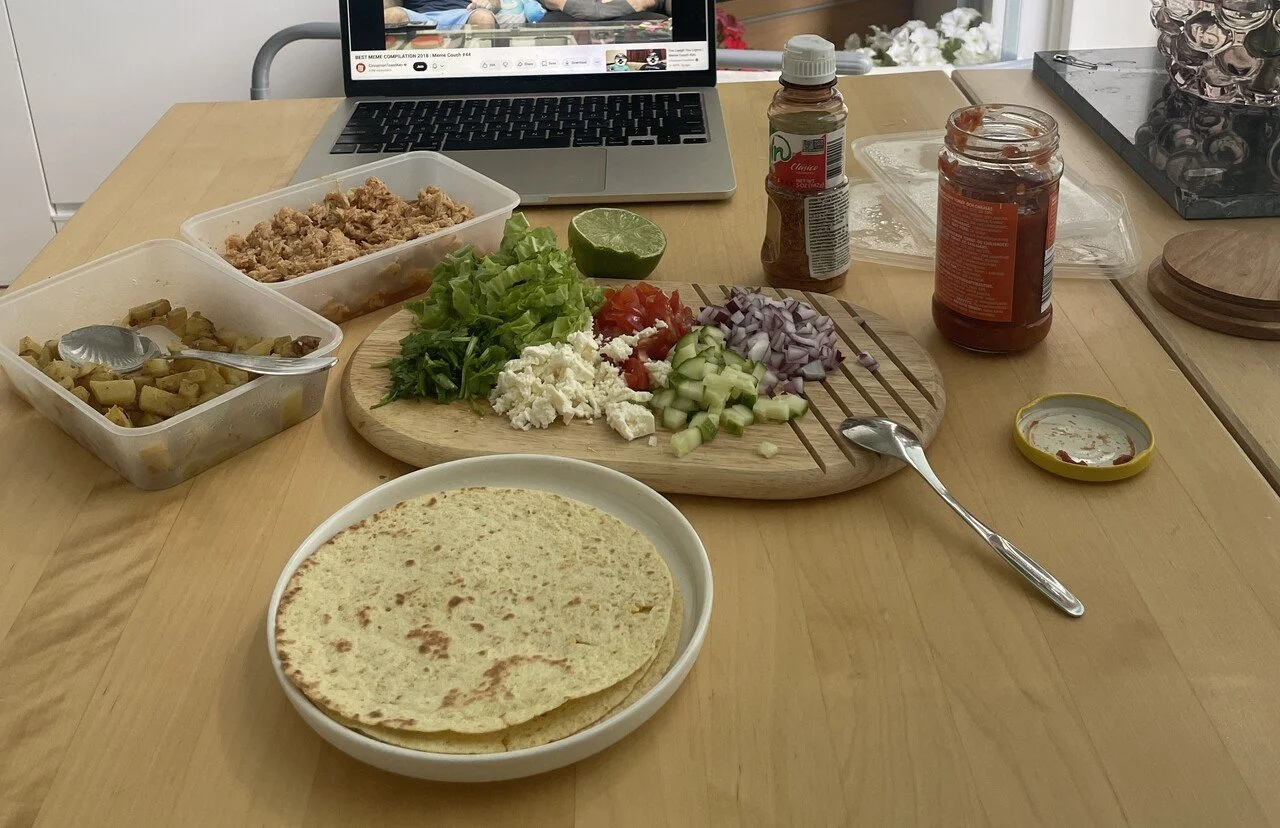
Food can be my creative outlet. I felt the juices flowing. I loved the challenge. And the limitations (aka that I needed to use the things from the list and best if I could figure out a way to use several of them at once) forced me to find new combinations, approaches and flavors.
Cooking new things is not that hard. The hardest is the mental load of looking for the recipes and stepping over insecurity. I made a pistachio creme that many of my friends loved and said how good of a cook I was, but the recipe was actually easy. Same with fudgey sweet potato brownies (‘cuz remember I had loads of raw cocoa) and pistachio bars that were easy, but required a tiny bit of time commitment.
Some items take time. Like the raw cocoa, canned fish (I started with 39 cans, wtf), sesame seeds, nutritional yeast. Now when I contemplate buying some item I crave, I’m much more aware of how much time and effort it might take to use it all up, even if I have great recipes. I have definitely left some things on the shelves because I could not commit to using the whole thing up.
It’s good to have staples to return to. Several of the recipes I relied on were not new. I had cooked them before (and I loved them before my potato-chicken hyper-fixation). These are things like a good mango curry, canned fish soup, pasta with nutritional yeast, salads. I used my old recipes but tried to modify them to use up more of my stuff (for example, I started adding sesame seeds into soups, and it’s actually pretty good).
I like a challenge and tracking progress. The excel, the weighing of products, the tracking of what’s left really motivated me. Being able to clearly see progress made me go the extra mile. If I had just relied on seeing visual progress, I would have given up much sooner. And maybe that’s why I don’t really have before and after photos to show: I just did not take any before photos ‘cuz I had the excel.
How can you do a Project Pantry?
So, if you want to do a Project Pantry in these last 3 months of the year (new year, new me, new food type of a thing), here’s how you can do it:
Pick which items you will add to your project. Focus on foods that have been in your cupboards for a long time.
Make a simple excel sheet (or a paper one) listing all those items and how much of each you have.
Cook recipes with the items. Find new ways to use things up. Don’t be scared to toss things that are not edible anymore. You can even keep a list of ‘recipes to make next’ with all the loose ideas of recipes you want to do.
If your list is long, focus on certain items for the month, while leaving others out.
Cross out the items you finish on the day you finish them. This gives that extra satisfaction.
Re-weigh, re-count, re-repeat on the 1st of each month.
If you’re up for it, you can try to track the cost of all the items you use up or to track how the project impacts your monthly food costs.
If you feel like something deeply disgusts you or makes you feel sick - get rid of it!
If you want to add more items to the list after you started - do so!
